Temples are not merely built. They are born. From sacred ratios and chiseled hymns of stone, a temple becomes the womb of the cosmos, inviting the seeker not only to pray, but to enter into presence.
The Arunachaleswarar Temple at the foot of Arunachala is more than architecture. It is a mandala of silence, a living yantra, and a mirror of the inner Self.

Architecture as a Spiritual Map
From the outer towers to the innermost sanctum, the layout of the temple reflects the soul's inward journey, from the many to the One.
- The Garbhagriha (sanctum) is the womb, the still center of creation.
- The Vimana rises above it like Mount Meru, the axis of the universe.
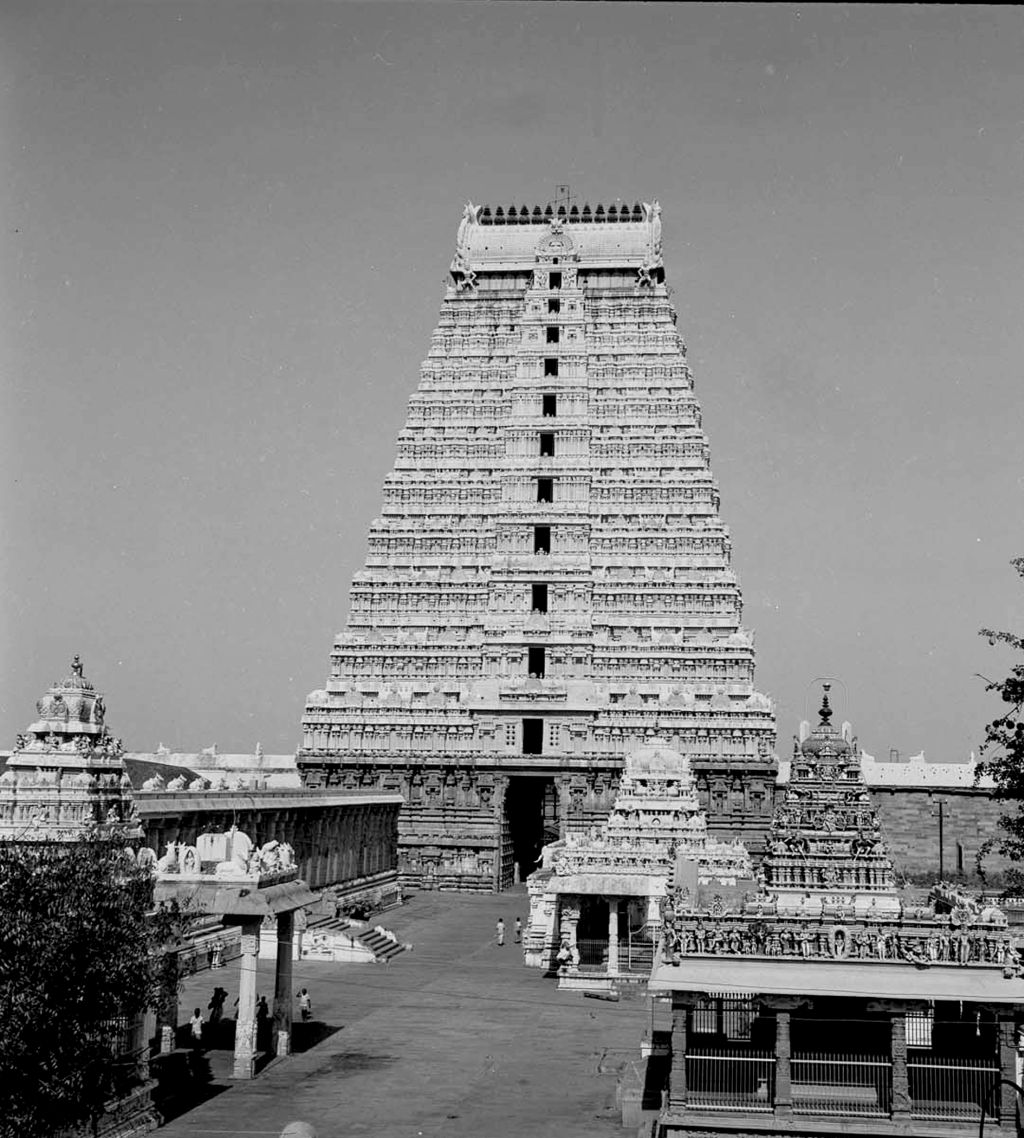
- The Gopurams, tall and ornate, are gates between worlds, marking the soul's transition from the mundane to the sacred.
Every stone is aligned with sacred geometry, in proportions meant to echo cosmic order.
The Styles of Sacred Form
In the vast geography of Indian architecture, two visions rise:
- Nagara Style (North India): Towering śikharas, domed like bee hives, topped by circular amalakas, reaching skyward.
- Dravida Style (South India): Pyramidal vimanas over the sanctum and monumental gopurams that become cosmic signposts.
In Tiruvannamalai, the Dravidian style unfolds at its grandest. Here, the gopuram is the call; the lingam is the answer.

Sacred Geometry: The Divine Blueprint
From the spiral of galaxies to the swirl of shells, the universe is geometry in motion. Sacred architecture honors this truth through:
- Yantras and Mandalas embedded in temple design.
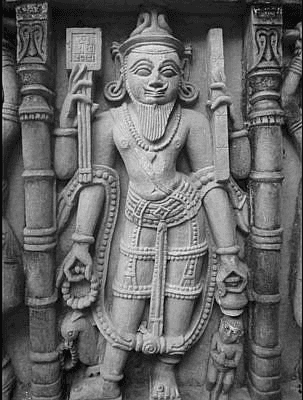
- Proportions based on Vastu Shastra and the Sthapatya Veda, attributed to Vishwakarma, the celestial architect.
- Structures as energetic harmonizers, balancing body, mind, and spirit.
These forms are not ornamental. They open into subtler registers of experience.
Architecture in the Service of Practice
Sacred space is not passive. It is participatory.
The layout of a temple becomes the yogi's path, leading the worshipper step by step from distraction to stillness, from outer offerings to inner absorption.
- From gopuram to sanctum, each threshold crossed is a layer of ego dissolved.
- Every pradakshina, a circumambulation not just of stone, but of the Self.
- Every chant or mantra reverberates through corridors designed to amplify silence.
This is not architecture. It is initiation.
Where Form Meets the Formless
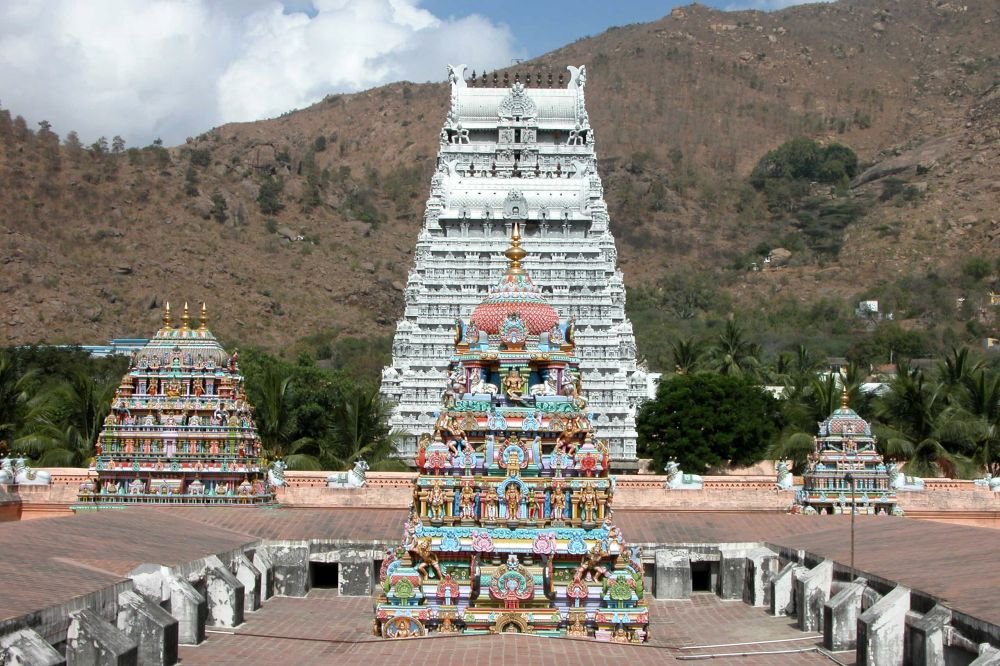
In Arunachala, the sacred space is doubled.
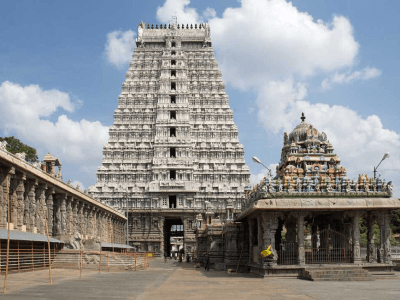
The temple is the manifest form of devotion.

The hill is the unmanifest flame of truth.
Together, they offer a sacred invitation: enter the space, walk the form, burn in the fire. Return to who you are.
To read further, click here