Four Great Teachers
There have been many intellectuals even in India who have looked down upon the path of Bhakti (devotion) as something inferior to Jnana (wisdom). Their short-sightedness becomes at once apparent when we study the lives of the great Four Teachers (Sambandar, Appar, Sundarar, and Manikkavacakar) and realise that these great Jnanis, too, were great Bhaktas who loved to visit Temples and sing the glories of the Lord.
The principal teachings of the four Saiva Samaya Acharyas is of love and surrender to God; and of service to God and godly men. God is One and He is Shiva. Man must get over his bonds which obtain in ignorance and obtain inseparable union with Shiva through the Lord's Grace.

Left to Right: Thirujnana Sambandar, Thirunavukkarasar Swami, Sundaramurthi Nayanar, Manikkavackar
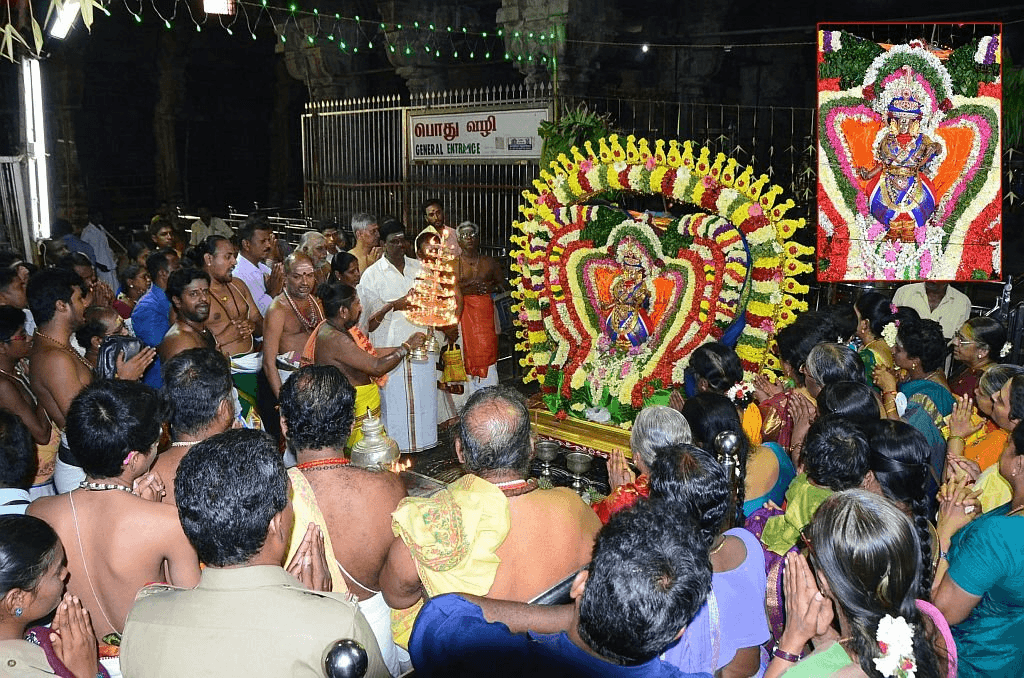
Sundaramurti Nayanar Utsavam, Big Temple
As well as individual ceremonies of worship for each of the four great saints at Tiruvannamalai, the Saiva Samaya Acharyas are recognised during the yearly Deepam festivities at Arunachala. This observance occurs during the 6th day of the 10-day Festival when murtis of the Nalvar Samaya Acharyas and representations of all the Nayanars are brought out in procession around the maha veedhis of Arunachaleswarar Temple.
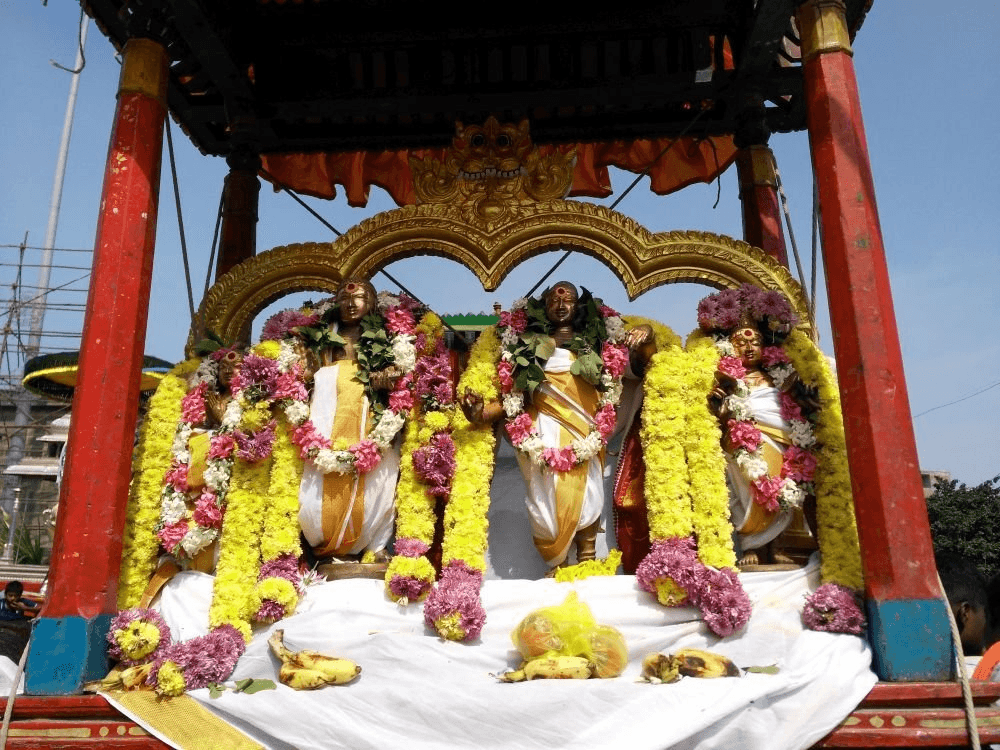
Saiva Samaya Acharyas carried in procession 6th day of Karthigai Deepam
These four great ones had differing relationships with Shiva: Jnanasambandhar saw himself as the son of Shiva, Appar as his servant, Sundaramurti as his friend, and Manikkavacakar as his beloved.
It is customary to observe the day on which these Saints attained the Lord's Feet as a holy day:
- Apparswami, Chitrai Sadayam
- Jnanasambandar, Vaikhasi Moolam
- Manikkavacakar, Ani Makham
- Sundaramurthi Swamigal, Adi Swathi
Thirujnana Sambandar
Thirujnana Sambandar was a Saiva poet-saint of Tamil Nadu who lived around the 7th century. He is one of the most prominent of the sixty-three Nayanars. Sambandar's hymns to Shiva were later collected to form the first three volumes of the Tirumurai, the religious canon of Tamil Saiva Siddhanta.
Sambandar took birth in a Brahmin family in Sirkali. When he was around three years old, the Goddess Parvati appeared and suckled him with her Milk of Wisdom. From that moment he began to compose and sing songs in praise of Lord Siva, the collection called Thevaram.
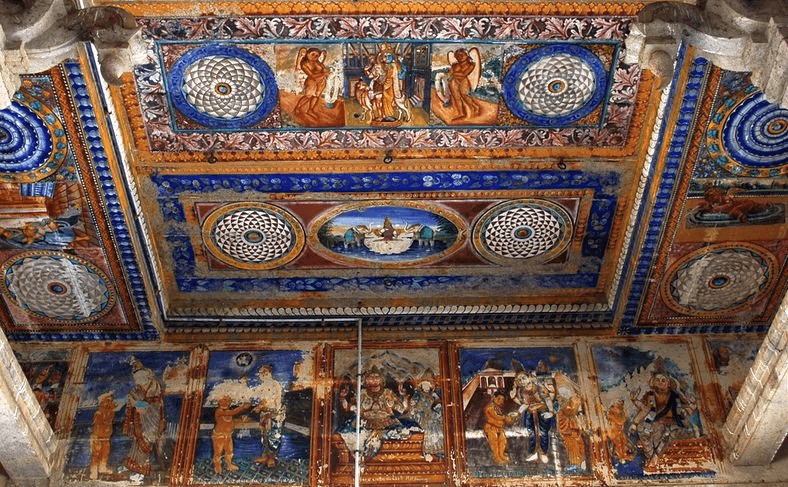
Brahmapureeswarar Temple, Sirkali fresco of Sambandhar's life
He composed 384 surviving poems (out of a reputed 10,000 hymns). On a pilgrimage to Tiruvannamalai, Lord Arunachaleswara appeared to him as an old Brahmin gathering flowers and led him to the temple, where the Lord then revealed his divine form.
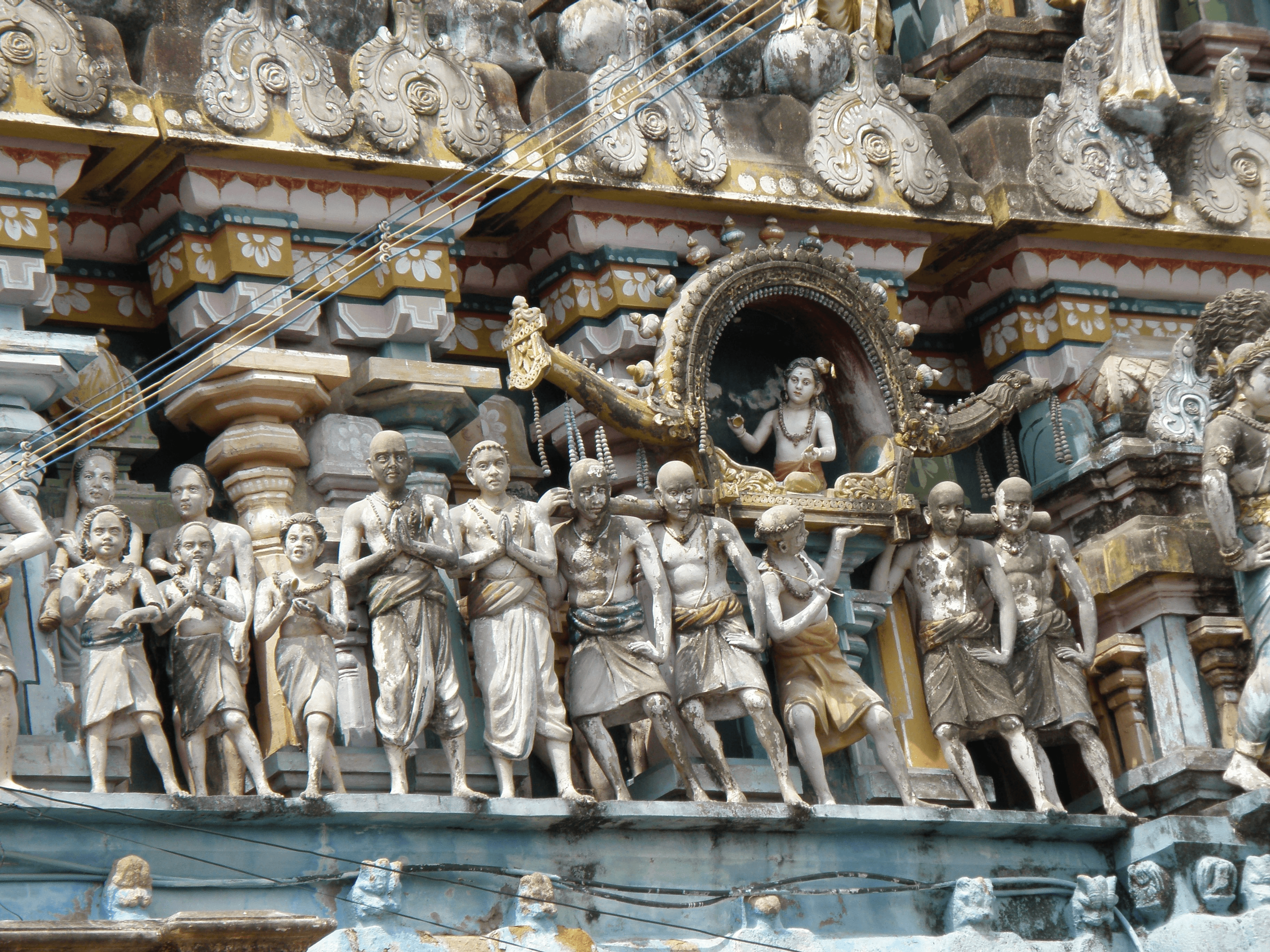
Appar helping to carry Sambandar's palanquin

Thirujnana Sambandar Nayanar
Thirunavukkarasar Swami (Appar)
Thirunavukkarasar was a seventh-century Saiva Tamil poet-saint and one of the most prominent of the 63 Nayanars. He was born in the middle of 7th century in Tiruvamur to a Vellala family. His childhood name was Marulneekiar.
In his youth Appar was attracted to Jainism and became a Jain teacher under the name Dharmasena. Afflicted by a painful illness, he prayed at the Siva temple where his sister served and was miraculously cured, returning to Saivism. He went on to help reconvert the king of Madura and was instrumental in the revival of Saivite temples across South India.

Appar Swami carrying the Uzhavaram
He travelled to many temples by foot, covering thousands of kilometres, and out of 276 Paadal Petra temples is believed to have personally visited 126. Out of a reputed 4,900 hymns, only 313 (3,120 verses) are available today. He is known as Thirunavukkarasar, meaning the King of Divine Speech. Appar attained mukti at the age of 81 years.
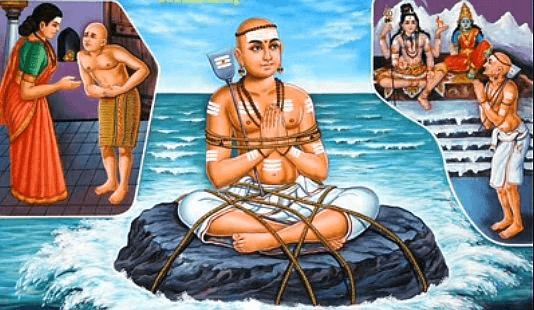
The Saint tied to a stone and thrown into the sea