
Extract from Sri Arunachala Puranam
Arunachala is depicted across Sanskrit scriptures, Tamil puranas, and Vedic hymns as the embodiment of Lord Shiva in the form of a Hill of Fire.
- In the Skanda Purana, the column of light symbolizes Shiva's supremacy over time, space, and dualistic ignorance.
- Stories of Aruna narrate the mythical origin of Arunachala, focusing on its symbolism as the eternal Self.
- The Arunachala Puranam retells these legends in lyrical Tamil, deeply emphasizing Arunachala's spiritual magnetism and its power to grant liberation to sincere devotees.
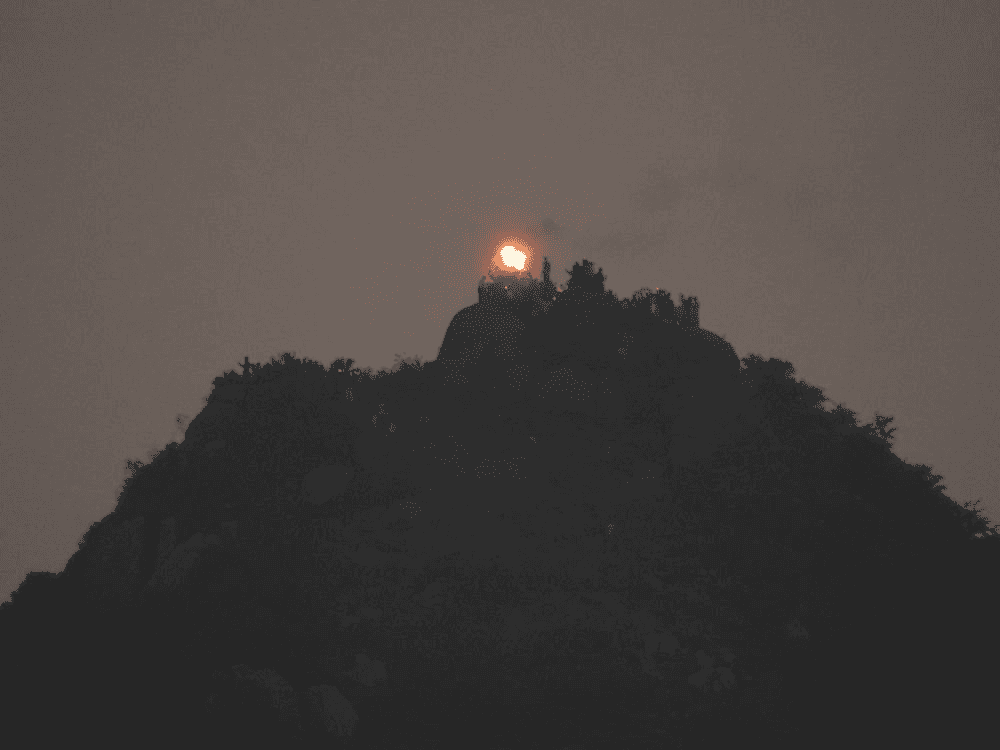
Arunachala in Story and Scripture
Arunachala is not just a hill. It is a silent blaze of truth rising from the Tamil plains. Across Sanskrit scriptures, Tamil Puranas, and ancient Vedic hymns, Arunachala is venerated as the embodiment of Lord Shiva in the form of Fire, the Tejo-Linga.
In the Skanda Purana, this form appears as a boundless column of fire, resolving the cosmic rivalry between Brahma and Vishnu. In the lyrical verses of the Arunachala Puranam, and in oral traditions like the Stories of Aruna, this blazing column becomes not only a mythological moment, but a living metaphor for the Self: eternal, vast, and ungraspable by the mind.
At Arunachala, the spiritual becomes tangible. The geography becomes sacred. And seekers are invited not to worship from afar, but to turn inward, to find the very origin of being.
Echoes of Eternity: The Arunachala Puranam
Composed in the 17th century by Saiva Ellappa Navalar, the Arunachala Puranam is an important text in Tamil devotional literature. In 649 verses, it draws on the Skanda Mahapurana and Linga Purana, weaving in local lore and poetic vision. This Sthala Purana doesn't just record stories. It sings of Arunachala's spiritual pulse, making the legends accessible to those who could not read Sanskrit.

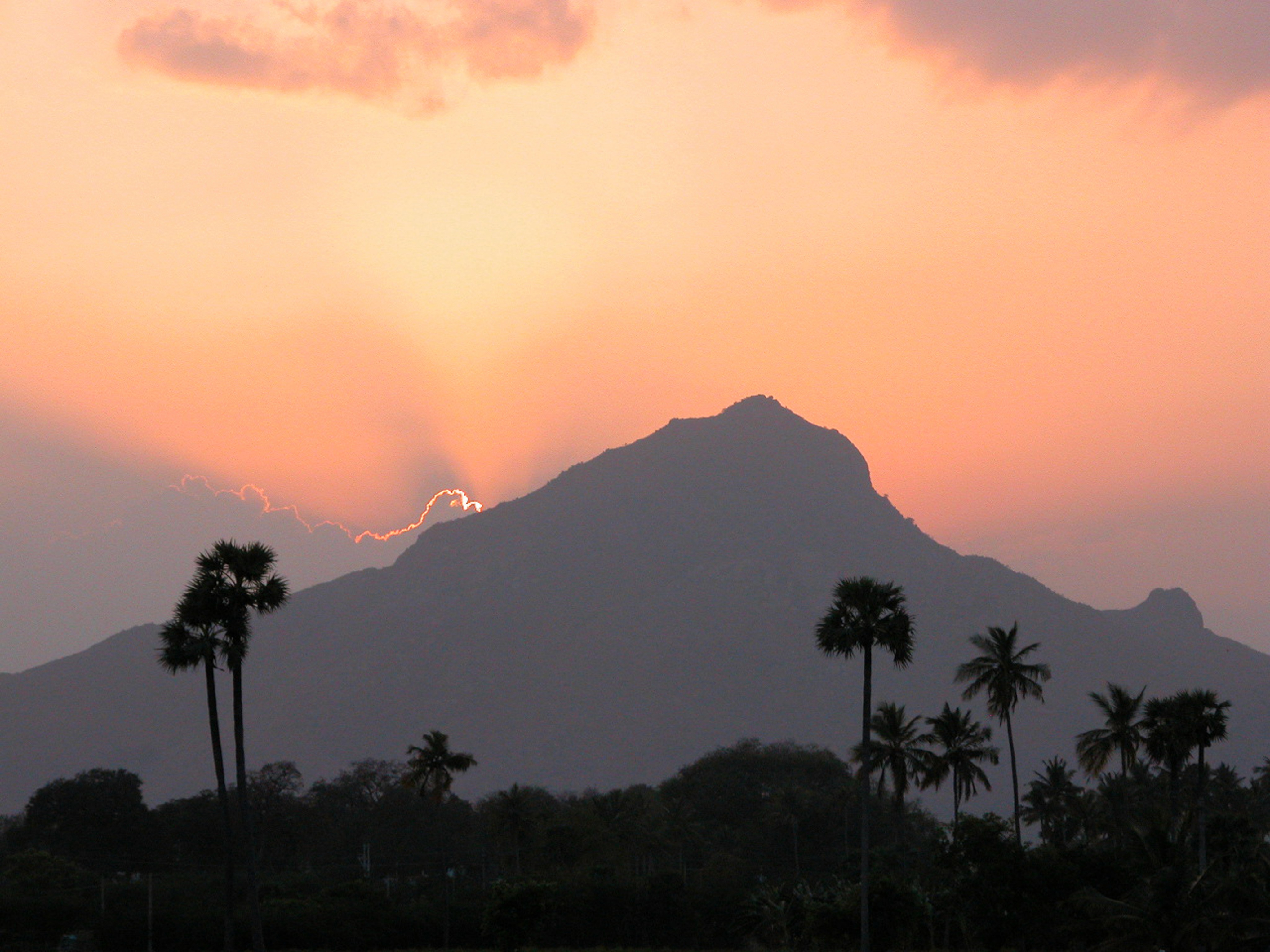
Shiva as Arunachala
At the center of the Puranam is a timeless vision: Shiva manifesting as a pillar of infinite fire to resolve a cosmic quarrel. Brahma flew upward, Vishnu searched below, but neither could find its beginning or end. In their surrender, Shiva revealed himself as Arunachala Hill: solid, still, and overflowing with divine presence.
This transformation from fire to form is central to Arunachala's mystique. It makes the inaccessible Supreme approachable, through touch, sight, and pradakshina.
A Divine Gathering
The Puranam paints Arunachala as a holy axis where celestial beings, sages, and gods converge. The line between heaven and earth blurs here. The sacred topography is not merely scenic. It is alive with memory, worship, and blessing. Every rock and tree echoes with devotion, anchoring the pilgrim to something eternal.
Liberation for All
In a dialogue between Sage Markandeya and Nandikeswara, the Puranam asks: where can liberation be attained by all, even the weak or speechless? The answer is Arunachala. Not through rituals or scholarship alone, but through remembrance, sight, or a single circumambulation with devotion. The hill becomes a universal sanctuary, open to all beings, human or otherwise.
A Lyrical Offering: Devotion in Every Verse
From invocations to Ganesha and Nataraja, to praises of Arunachaleswara and Unnamulai Amman, the Puranam is steeped in poetic richness. Its verses are sculpted with rhythm, metaphor, and reverence. At times the poet simply pauses, held in humility before the subject itself.
A Living Legacy: The Puranam Today
More than three centuries since its composition, the Arunachala Puranam remains a living text. It is sung, studied, and shared among devotees across generations. It shapes festivals, rituals, and daily worship in Tiruvannamalai. And through translations, especially by scholars like Robert Butler, it continues to guide seekers across the world into the mystery and grace of Arunachala.