Tiruvannamalai sits at the foot of Arunachala Hill in southern India. It is less a destination than a calling. With deep temple traditions going back millennia and an unbroken lineage of saints, this town has drawn sages and seekers across centuries. A pilgrimage here is a deep inward journey masked as an outer one, where every path leads not just to temples and ashrams, but to the Self.
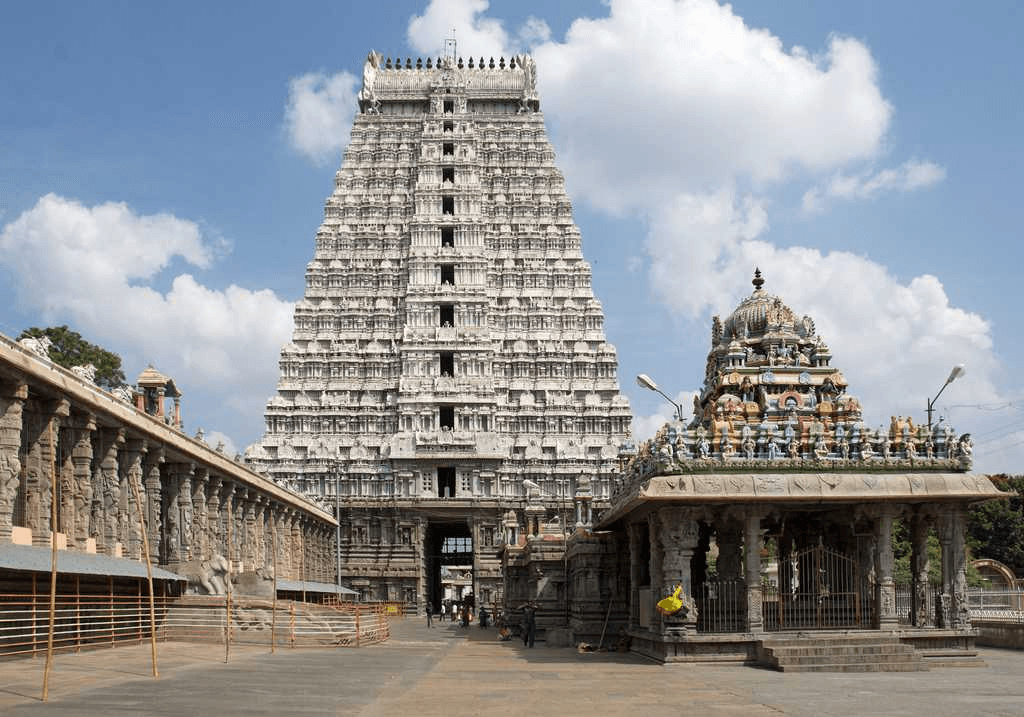
The Spiritual Epicenter: Arunachala and Annamalaiyar Temple
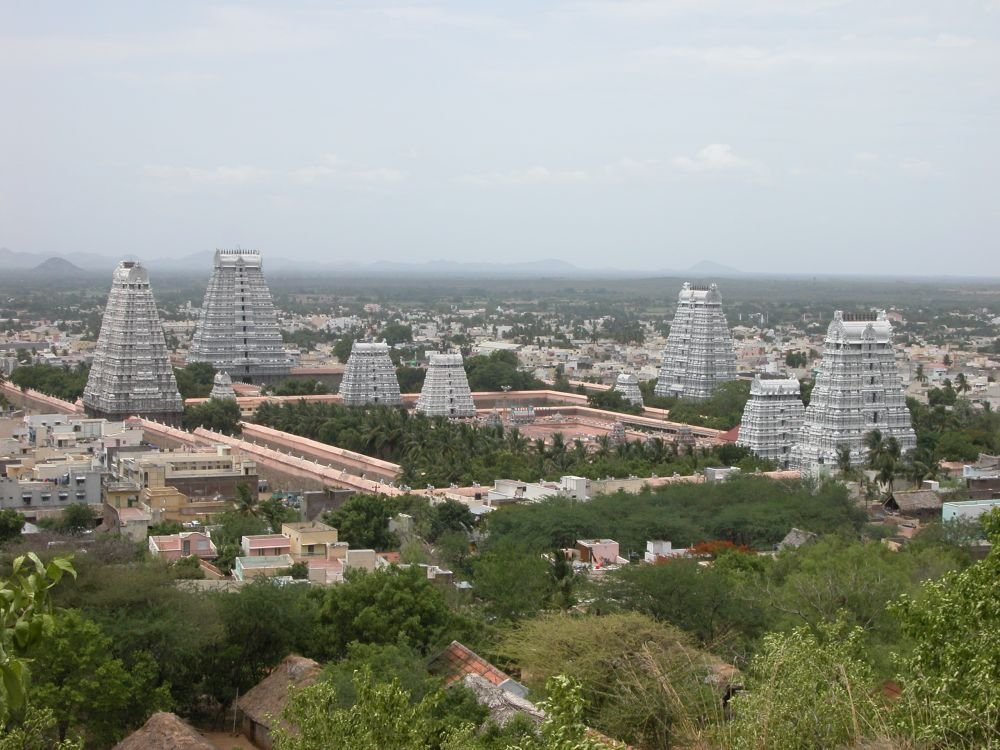
At the center of Tiruvannamalai stands Arunachala Hill, revered in the scriptures as the embodiment of Lord Shiva in the form of Fire (Tejo-Linga). It is not just a hill. It is Shiva Himself. The town radiates around the sacred Annamalaiyar Temple, one of the largest temple complexes in India and a cornerstone of Shaivite devotion.
Dedicated to Lord Annamalaiyar (Shiva) and Goddess Unnamulai (Parvati), the temple is a fine example of Dravidian architecture, with its towering Rajagopurams and spacious prakarams. Pilgrims can witness elaborate daily rituals, the cosmic dance of Nataraja, and the Karthigai Deepam festival, during which a massive flame is lit atop Arunachala in celebration of Shiva's manifestation as fire.
Nearby lies the Adi Annamalai Temple, a smaller and older shrine on the inner path of Girivalam, believed to be the earliest known Shiva shrine at the base of the hill. The spiritual potency here is palpable, especially during the quiet hours before dawn.
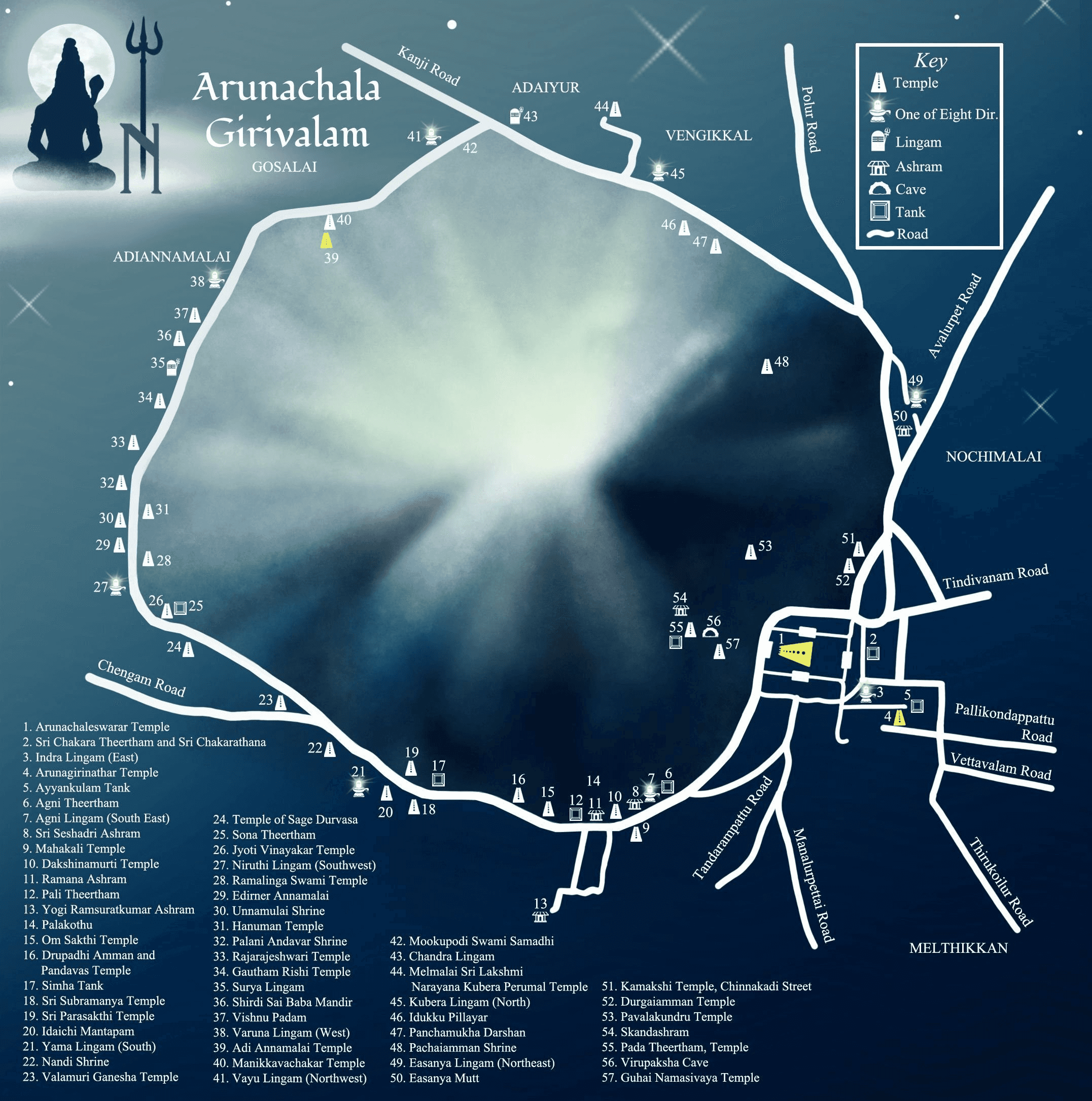
Girivalam: Circumambulating the Divine
One of the most revered practices in Tiruvannamalai is Girivalam (the 14 km circumambulation of Arunachala Hill). Unlike other pilgrimages that lead to a central shrine, Girivalam is itself the act of worship. As devotees walk barefoot under moonlit skies, they pass by eight ancient lingams (Ashta Lingams), each representing a different direction and a cosmic force. It is said that just one full circuit with devotion can purify karma and awaken spiritual clarity.
The practice is especially powerful on Pournami (Full Moon) nights, when hundreds of thousands walk in silence, chant, or meditate, letting the sacred presence of Arunachala guide their steps.
Ramana Maharshi and the Path of Self-Enquiry
No pilgrimage to Tiruvannamalai is complete without paying homage at Sri Ramanasramam, the ashram of Bhagavan Sri Ramana Maharshi, one of the greatest modern sages of India. Known for his silent presence and the radical simplicity of his teaching (“Who am I?”), Ramana's life exemplified surrender and non-dual realization.
Pilgrims can visit:
- Ramana's Samadhi shrine,
- The Old Hall, where he sat in silence for decades,
- The Skandasramam and Virupaksha caves on the hill where he meditated in solitude.
The Ashram also offers a library, daily chanting, and simple accommodation for earnest seekers. Even in silence, the atmosphere is charged with an unmistakable peace.
Other Sacred Ashrams and Centers of Grace
Tiruvannamalai has drawn great souls across centuries, and many have established ashrams and centers here. Each offers its own entry into the Arunachala experience.
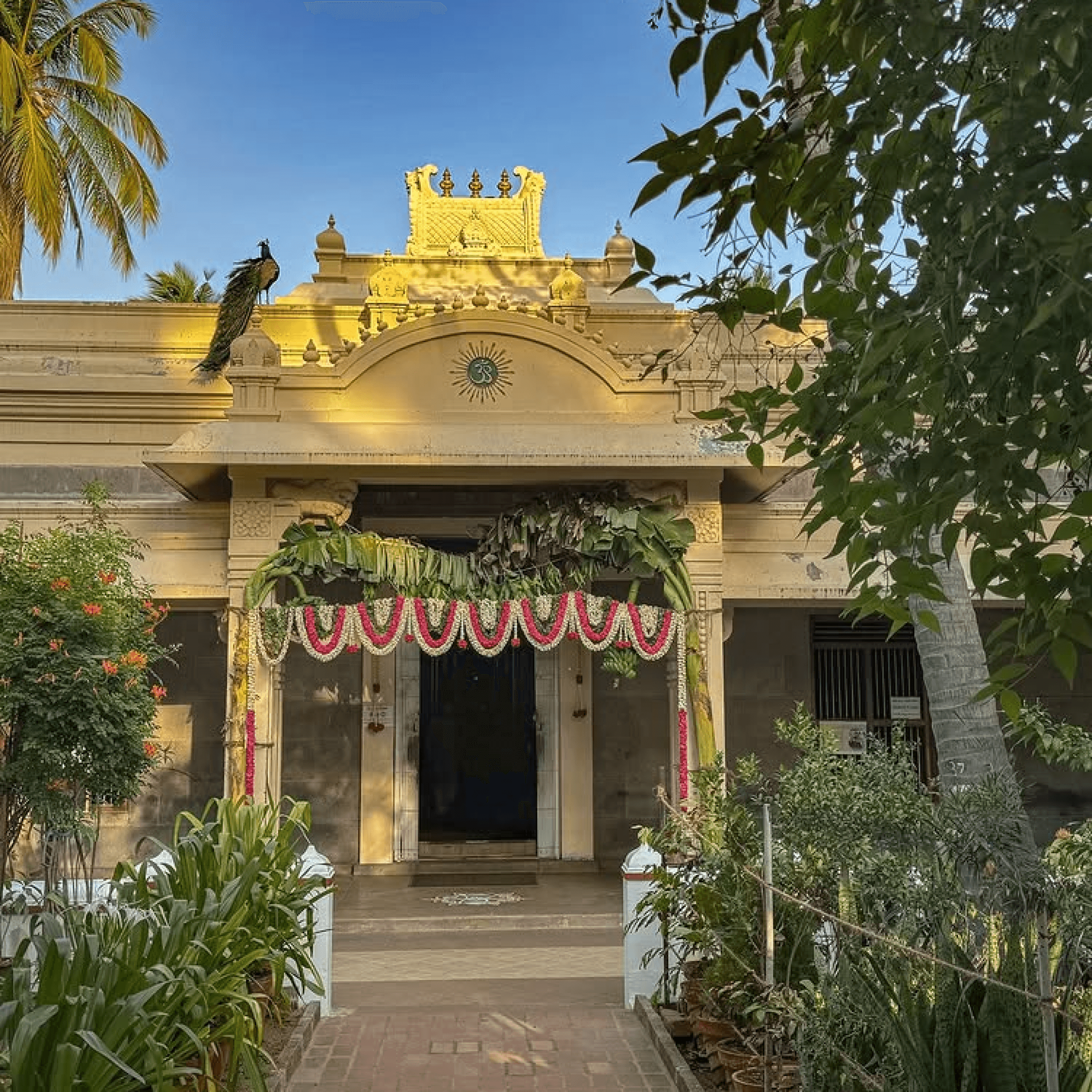
Seshadri Swamigal Ashram
Yogi Ramsuratkumar Ashram
Further along the Girivalam path is the peaceful ashram of Yogi Ramsuratkumar, known as the “Beggar Saint of Tiruvannamalai.” With his signature chant “Om Sri Ram Jai Ram Jai Jai Ram”, Yogi Ram's presence continues to guide many on the path of devotion and surrender.
Other Centers
There are many other lesser-known but deeply powerful spiritual centers, such as:
- Shanti Ashram (Swami Shantananda)
- Sri Ramakrishna Math and Vivekananda Library
- Annamalai Swami Ashram, a disciple of Ramana Maharshi

The Sacred Caves
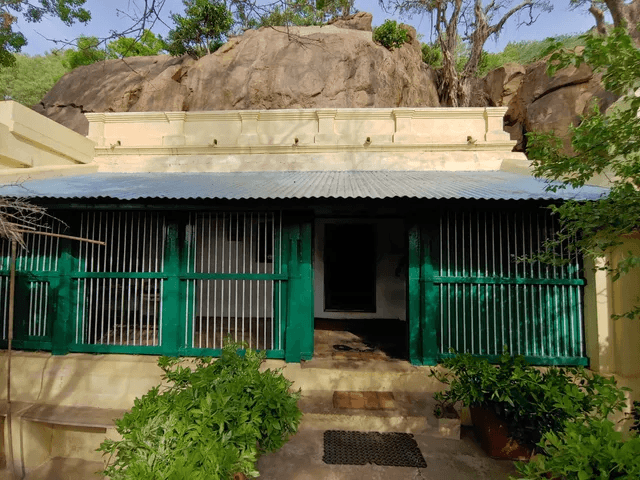
Long before the Ashram was built, Ramana Maharshi lived in solitude in caves on Arunachala Hill. These caves are not tourist spots. They are living shrines, where silence speaks louder than scriptures.
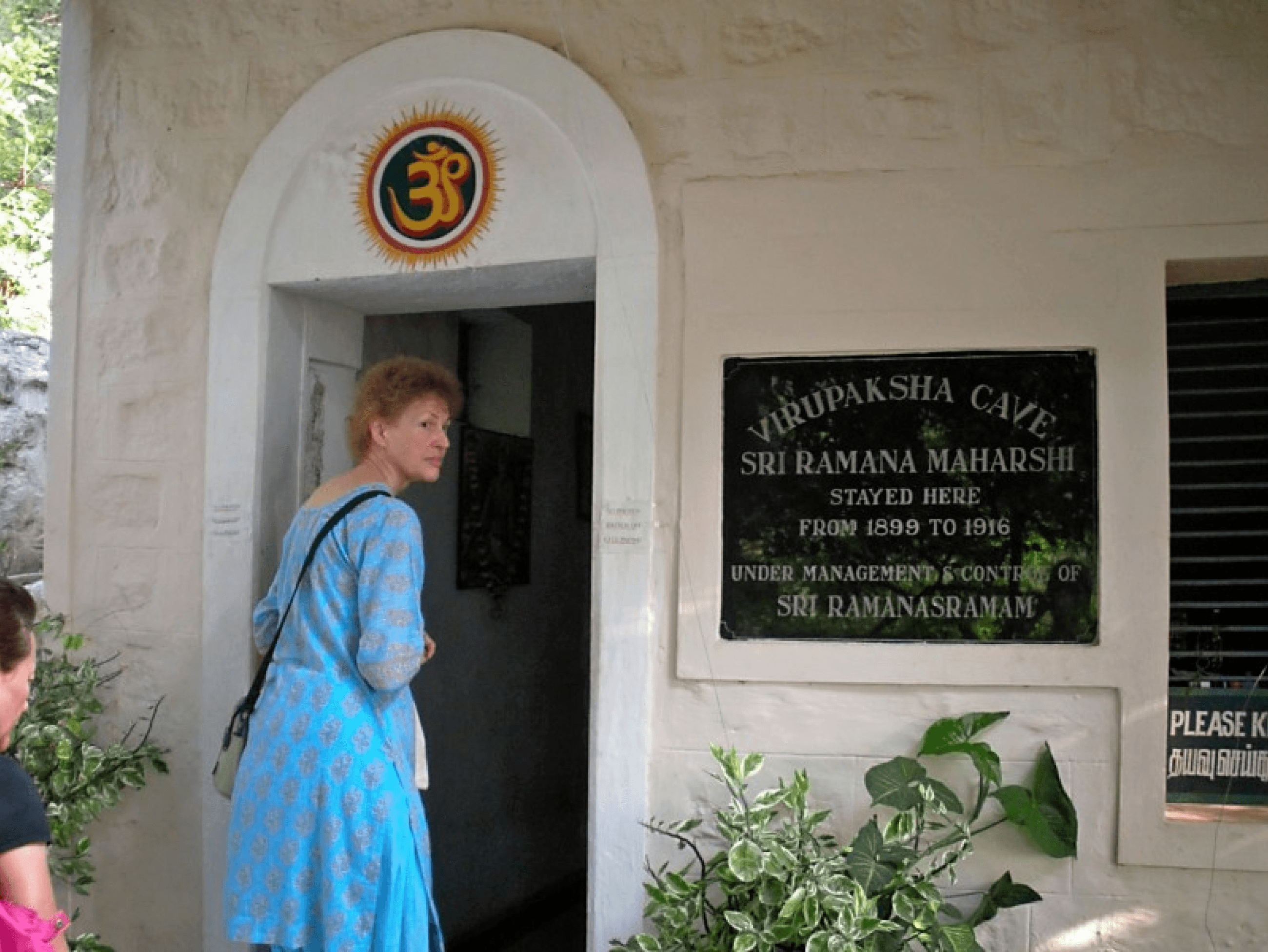
Virupaksha Cave
- Shaped like the sacred “Om” symbol.
- Ramana lived here from 1899 to 1916.
- Named after a saint who attained samadhi here.
- Energetically intense and charged with silent power.
Skandasramam
- Higher up on the hill.
- Ramana stayed here with his mother from 1916 to 1922.
- Wide views of the town and hill; the atmosphere is still and meditative.
- Worth the climb for any serious seeker; the path begins behind Ramana Ashram and takes about 30–45 minutes on foot.
A Living Sacred Town
Apart from the temples and ashrams, the very air of Tiruvannamalai seems steeped in Tapas (spiritual heat). Sacred tanks, small shrines, wandering sadhus, and devotees chanting verses from the Tevarams and Arunachala Stuti Panchakam bring the streets to life. Simple roadside tea stalls and dhabas often echo with discussions on Advaita, devotion, and the grace of Arunachala.
Practical Pilgrimage Tips
Best time to visit
November to March for cool weather; Karthigai Deepam (Nov-Dec) is the most celebrated festival.
Footwear
Carry easy-to-remove slippers; Girivalam is traditionally done barefoot.
Stay
Ramana Ashram, Yogi Ramsuratkumar Ashram, and various guest houses offer clean, spiritual accommodations.
Food
Mostly sattvic, simple South Indian fare is available in many eateries around the temple and Ashrams.
Arunachala is calling
As the Arunachala Mahatmyam declares, “By merely thinking of Arunachala, one is liberated.” This sacred hill doesn't just reside in the geography of Tamil Nadu. It lives in the hearts of seekers around the world.
Come not for the sights. Come for the silence.